
First Home Buyer Checklist: What to Do Before You Buy Property in New Zealand

Buying your first home is exciting, but it can also feel overwhelming. There’s a lot more to the process than simply finding a property you like. From finance and due diligence through to understanding value and negotiating the deal, the small details can have a big impact on the outcome.
At The Finders, we have created a practical first home buyer checklist to help you prepare before making one of the biggest financial decisions of your life.
1. Understand Your Budget Properly
Before you even begin looking at homes, understand what you can comfortably afford. This means more than simply asking the bank for a maximum number.
You should also factor in:
Weekly living costs
Insurance
Rates
Maintenance
Future interest rate changes
Legal and due diligence costs
Renovation or furnishing expenses
A bank may approve one figure, but your lifestyle and comfort level may say something different. Do your research on mortgage advisors (brokers and banks) before deciding who to work with. Seek recommendations from people who have personally used the broker or bank they are referring you to.
A realistic budget is the foundation of buying well. Our guide to How to Buy the Right Property in Taranaki (Without Overpaying) explains how having a clear strategy before you start searching can lead to better buying decisions.
If you're still in the renting stage, our guide Ready to Exit Your Renter Era? Here's How to Make the Move in Taranaki explains how to prepare for home ownership with confidence.
2. Get Pre-Approval Before Looking Seriously
One of the biggest mistakes first home buyers make is looking at properties before finance is organised.
Pre-approval helps you:
Understand your realistic budget
Move quickly when the right property appears
Show agents and sellers you’re serious
Avoid emotional disappointment
In competitive markets, buyers without pre-approval can easily miss opportunities.
3. Understand KiwiSaver & First Home Support Options
Many first home buyers in New Zealand may be eligible to use:
KiwiSaver withdrawals
First Home Loan schemes
Low-deposit lending options
Speaking with a mortgage adviser early can help you understand what support may be available and how it impacts your budget.
4. Decide What Actually Matters to You
A lot of buyers start with a broad wish list, but clarity becomes important quickly.
Ask yourself:
Do you value location or house size more?
Is school zoning important?
Are you willing to take on/will the bank allow any renovations?
Do you want low maintenance?
Is future resale important?
Are you buying for lifestyle or investment potential?
What are your short and long term property goals?
The “right” property looks different for every buyer.
5. Consider Having Professional Representation
Most first home buyers spend a lot of time researching properties, finance and suburbs, but very few consider having a professional working exclusively for them throughout the buying process.
A buyer’s agent (also known as a buyer’s advocate) represents the buyer during the property search and purchase process. Unlike listing agencies and salespeople, who are engaged by the seller to achieve the best possible result for the seller, a buyer’s agent works solely in the buyer’s best interests.
We explore this in more detail in Who Really Represents You When Buying a Property in New Zealand?, including why understanding who represents whom is such an important part of buying with confidence.
At The Finders, we help buyers by:
Finding suitable properties both on and off-market
Helping buyers avoid poor-quality purchases
Researching property value and comparable sales
Reviewing properties strategically
Assisting with thorough due diligence
Providing negotiation support and strategy
Helping buyers make more informed decisions
For many buyers, this can also save a significant amount of time and potentially money. Instead of spending countless hours searching online, attending open homes and trying to understand the market alone, buyers can leverage the experience, systems and industry knowledge of a professional already working within the property market daily.
Having professional guidance can also help buyers avoid costly mistakes such as:
Overpaying for a property
Purchasing something not fitting your brief
Missing hidden issues during due diligence
Making emotional decisions under pressure
Buying a property that does not align with long-term goals
Many first home buyers don’t realise that listing agents have a legal duty to act in the seller’s best interests. This means information you share with a selling agent, including your budget, motivation, urgency or emotional attachment to a property, may need to be disclosed back to the seller.
Understanding this dynamic is important when negotiating property. Having experienced representation on your side can help create a more balanced buying process, particularly when purchasing in competitive markets or when buying property for the first time.
Yes, there is a fee involved in using a buyer’s agent. However, a good buyer’s agent should save you money and time, not cost you money - through better buying decisions, negotiation strategy, risk reduction and helping you avoid expensive mistakes.
If an agent offers to help you find a property and they do not have an agency agreement (buyer agency agreement) with you, they are likely working for the seller. Ask one question to this salesperson; “Who is paying your commission?”.
6. Research Areas Carefully
Not all suburbs or towns perform the same.
Some areas may offer:
Better long-term capital growth
Better rental yield/demand
More affordable entry points
Different lifestyle benefits
The “best area” depends entirely on your goals, budget and stage of life. A property can look great online while still being the wrong fit strategically.
If you're comparing suburbs across New Plymouth and wider Taranaki, our New Plymouth Property Market: Suburb-by-Suburb Breakdown for Buyers is a useful place to start.
7. Don’t Skip Due Diligence
Once you have found a property that fits with your brief, due diligence is one of the most important parts of buying property, especially in New Zealand where housing stock can vary greatly.
This can include:
Reviewing council files
Checking LIM reports
Looking for flood or hazard risks
Investigating consent history
Assessing renovations or additions
Understanding insurance implications
Identifying potential maintenance issues
Some problems are not immediately obvious at first sight. That's why we believe thorough due diligence often has a bigger impact on your long-term outcome than negotiating a slightly lower purchase price. Read Is Due Diligence More Important Than Negotiating a Lower Price? to find out why.
At The Finders, we complete a comprehensive 97-point due diligence checklist before buyers invest in reports, or progress too far into negotiations.
8. Understand Property Value, Not Just Asking Price
One of the hardest parts for first home buyers is understanding what a property is actually worth. Online estimates and asking prices are not usually the actual market value.
Factors that influence value include:
Comparable recent sales
Renovation quality
Location/suburb
Sunlight and aspect
Land usability
School zones
Future development potential
Buyer competition
Overpaying can happen very easily when emotions take over. We explain the difference between asking price, advertised price and true market value in Is This Property Overpriced? Advertised Price vs Market Value in Taranaki.
9. Understand the Offer Process Before You Commit
Before making an offer on a property, it’s essential to understand how the process works and what you are actually signing.
In New Zealand, offers are made using an Agreement for Sale and Purchase of Real Estate (unless the property is being sold by Auction or Tender). This becomes legally binding once both the buyer and seller sign. For this reason, it is strongly recommended that your property lawyer reviews the agreement in full, including all terms and conditions, before it is submitted to the vendor.
Where possible, your lawyer should prepare and review all documentation prior to submission, as they are acting solely in your best interests as the buyer.
The selling agency/salesperson can prepare the offer paperwork for you, however it is important to remember they are engaged by the vendor (the seller). Their responsibility is to achieve the best possible outcome for their client, not you the buyer.
It is also important to understand that the selling agent will have full visibility of your offer details, including price, deposit, conditions, and settlement terms, before the offer is presented to the vendor. If the selling agency/salesperson is drawing the offer up for you, I recommend leaving the price blank and you can insert this upon signing.
Multi-offer situations
A multi-offer situation only exists when there are at least two signed offers on the same property at the same time. If there is only one offer or general verbal interest, it is not a multi-offer scenario. In some cases, a pre-auction or pre-tender offer process may also result in a multi-offer situation.
In a multi-offer situation, buyers are typically asked to submit the strongest offer they are willing to make, as there is often no opportunity to negotiate further with the vendor. All offers are confidential and cannot be disclosed between parties.
This makes preparation, pricing strategy, and due diligence critical. Most agencies also have a multi-offer policy that outlines how their process works, which is worth reviewing so you understand how decisions are made.
This is where having a good buyer’s agent can provide a real advantage, helping you position your offer strategically and avoid overpaying or missing key risks. It is also important to involve your lawyer early in the process, as outlined above, to ensure you are in the strongest possible position before submitting an offer.
10. Learn How Negotiation Impacts the Outcome
Most buyers focus heavily on finding the property. But often, the real outcome is shaped during negotiation.
This includes:
Offer structure
Conditions
Timing
Deposit terms
Negotiation strategy
Understanding seller motivation
Many buyers don’t realise the listing salesperson works for the seller. Their role is to help the seller achieve the best possible outcome. That’s why more buyers are now choosing to have professional representation on their side too.
11. Think Beyond the “Perfect” Home
Your first home usually doesn’t need to be your forever home. A smart first purchase can help create opportunities later.
Sometimes the best first home is:
A solid home in a better area
A property with future potential
A home below your maximum budget
A property with cosmetic improvements possible
Buying strategically matters. Remember, a beautifully presented property isn't always the best purchase. Our article Not All Great Looking Properties Are Great Buys explains why looking beyond appearances is so important.
12. Build the Right Team Around You
Buying property becomes far less stressful when you have experienced professionals helping guide the process.
This may include:
Buyer’s agent
Mortgage adviser
Lawyer
Building inspector
Insurance adviser
Building the right team is one of the easiest ways to avoid the common pitfalls many first home buyers experience. Our article What First Home Buyers in Taranaki Often Get Wrong When Buying Property highlights the mistakes we see most often and how to avoid them.
The right advice early can save buyers significant stress, money and mistakes later.
Final Thoughts
For a long time in New Zealand, the normal approach was to navigate buying property alone. But property has become more complex, more competitive and more expensive.
First home buyers are increasingly realising that having experienced guidance can make a major difference, not just financially, but emotionally too.
At The Finders, we work exclusively for buyers, helping people buy with more confidence, strategy and clarity. Whether you’re ready to buy now or simply want to better understand the process, feel free to reach out for a no-obligation chat.
Settled.govt.nz is also a great online tool for buyers navigating the home buying process.
Frequently Asked Questions: First Home Buyers
-
Many first home buyers find value in having professional guidance throughout the process, especially around due diligence, negotiation and understanding value. A buyer’s agent works for the buyer, not the seller, so has the buyers best interest in mind.
-
One of the biggest mistakes is becoming emotionally attached to a property too early without fully understanding market value, risks or completing thorough due diligence.
-
This depends on the purchase price, lending requirements and buying costs. Buyers should also allow for legal fees, insurance, reports and moving expenses. Discuss with a mortgage adviser early to see where you currently sit, and whether there is a financial goal to work towards to buy your first home.
-
Some parts of New Zealand are highly competitive, particularly good quality homes in desirable areas. Preparation and strategy can make a significant difference.
Thinking about buying property in Taranaki?
Whether you're just starting to look, have already found a property, or simply want to know what your options are, Thomas is happy to have a chat.
The first conversation is free, there's no obligation, and no pressure to proceed. Just straightforward advice from someone who knows the Taranaki market.
More Buyer Insights


















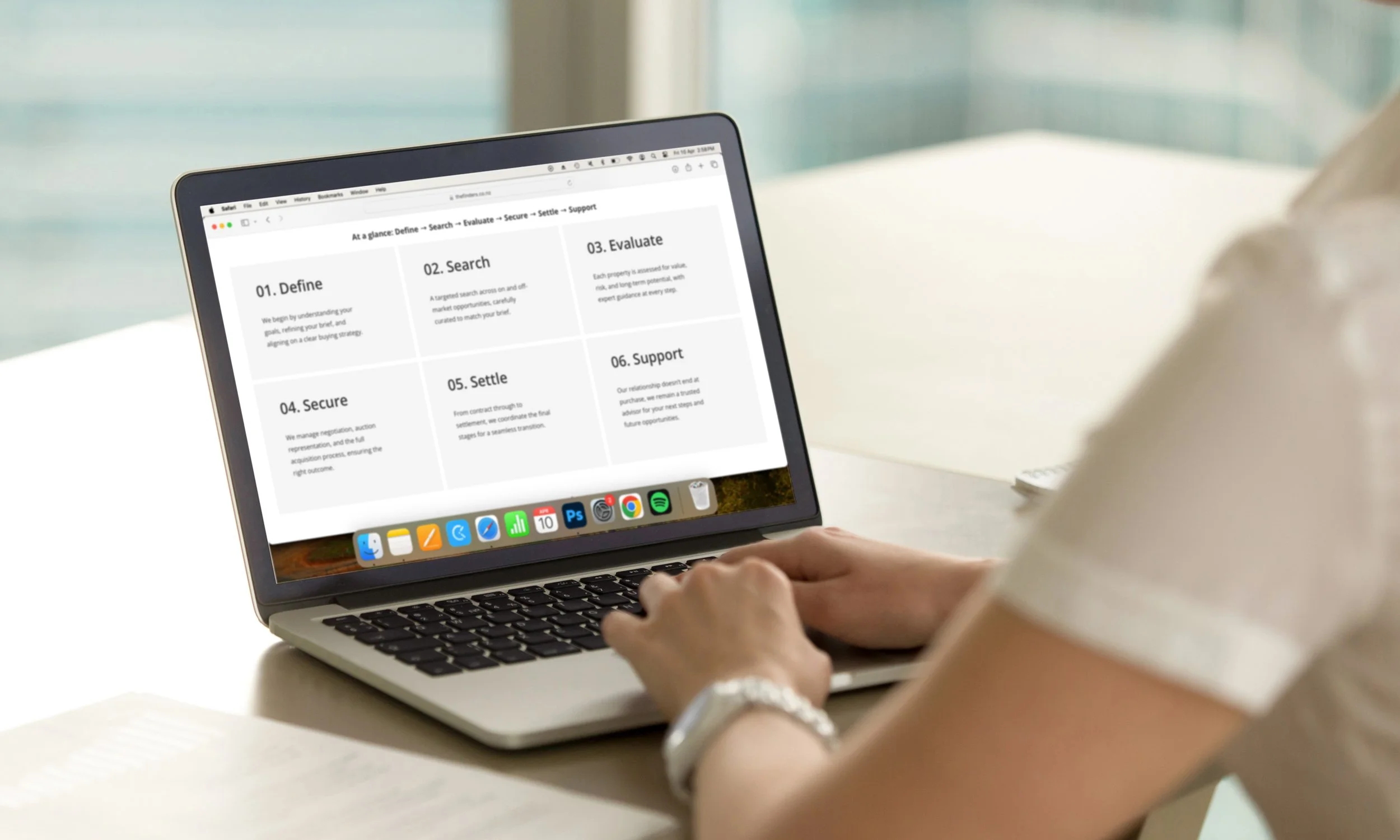
Six months into The Finders, we're reflecting on what we've learned about buying property in Taranaki. From securing off-market opportunities to the importance of due diligence, discover the results, lessons and insights shaping our approach to helping buyers make smarter property decisions.