
Ready to Exit Your Renter Era? Here's How to Make the Move in Taranaki

If you've been renting for years, the idea of buying your first home can feel like a significant step. You may be asking yourself: Is now the right time? Have I saved enough? Should I wait another year?
The reality is there is rarely a perfect time to buy. What matters is being prepared and understanding the opportunities available in the market you're buying in. Right now, first-home buyers are in a stronger position than they have been in recent years. Our guide to How to Buy the Right Property in Taranaki (Without Overpaying) explains how preparation and having a clear buying strategy can help you make the most of today's market. There are more properties available, sellers are often more open to negotiation, and buyers have greater opportunities to secure quality homes at fair value.
That doesn't mean every property is a bargain, but it does mean buyers have more choice, more time to make informed decisions, and increased negotiating power compared with the more competitive conditions of previous years. This shift is reflected in recent market activity, with fresh Cotality data showing first-home buyers accounted for a record 28.3% of all property purchases during the April–June quarter this year. More buyers are successfully making the move from renting to owning, taking advantage of the opportunities available.
If you're thinking about leaving your renter era behind, here are the steps we'd recommend to help make the transition from renting to owning as smooth and successful as possible.
1. Know What You Can Afford
Before you start scrolling through property websites or attending open homes, speak with a mortgage adviser and understand where you stand financially.
A pre-approval gives you a clear understanding of:
How much you can borrow
What your repayments are likely to be
How much deposit you'll need
The price range you can confidently shop within
Your mortgage adviser may tell you that you're not quite ready to buy just yet - and that's okay. The value in getting advice early is knowing exactly what needs to happen next. It could be creating a savings plan, reducing debt, improving your financial position, or setting a realistic timeframe to get you purchase-ready.
Too many first-home buyers spend months chasing homes that are outside their budget - or, just as often, underestimate what they can actually afford. Knowing your numbers from the outset means you can focus on the right properties, make informed decisions, and move quickly when the right opportunity comes along.
2. Don't Wait for the "Perfect" Home
One of the biggest mistakes first-home buyers make is believing their first home has to be their forever home.
In reality, your first purchase is often just the beginning. The goal is to get onto the property ladder with a home that suits your needs today while putting you in a stronger financial position for the future.
Instead of asking yourself:
"Will I live here forever?"
Ask:
"Will this property help me get to where I want to be in five years?"
For many homeowners, their first property becomes the stepping stone to their next one. Building equity and gaining a foothold in the market can often be more valuable than waiting years for the "perfect" home to come along.
3. Know What Support Is Available
Many first-home buyers are surprised by the financial assistance they may be eligible for.
Depending on your circumstances, you could access:
Your KiwiSaver first-home withdrawal
A First Home Loan (if eligible)
Other first-home buyer initiatives that may be available
These options can make home ownership more achievable by reducing the amount of cash you need upfront or helping you get into the market sooner. A good mortgage adviser can explain what you're eligible for and help you make the most of the support available.
4. Budget for More Than Just the Deposit
Saving for your deposit is a huge milestone, but it's only part of the cost of buying your first home.
It's important to set aside funds for the expenses that come with the purchase, including:
Solicitor's fees
Building inspection
LIM report
Valuation (if required by your lender)
Moving costs
Insurance
Any immediate maintenance or repairs
The good news is that many New Zealand banks offer a cash contribution (cashback) when you take out a home loan. Typically ranging from 0.7% to 1.0% of your loan amount, this contribution can help offset many of these upfront costs. Your mortgage adviser will be able to explain which lenders are offering cash contributions and help you structure your loan to make the most of any available incentives.
Planning for these additional costs, and understanding what financial assistance may be available, will help make the buying process far less stressful and ensure there are no unexpected surprises once your offer is accepted.
5. Don't Assume the Asking Price Is the Property's Value
The advertised price is exactly that, an asking price. It isn't always an accurate reflection of what a property is worth.
Pricing can be influenced by a range of factors, including:
The seller's expectations
The agent's marketing strategy
Current buyer competition
Local market conditions
The best buying decisions are based on recent comparable sales, the property's condition, and current market value, not just the number shown in the online listing.
Understanding what a property is truly worth gives you the confidence to make a competitive offer without paying more than you need to. Most of our buyers are successfully purchasing homes below the original asking price, making it even more important to know the difference between price and value. Learn how to assess value in Is This Property Overpriced? Advertised Price vs Market Value in Taranaki.
6. Buy the Right Home - Not Just the Nicest One
A fresh coat of paint, stylish furniture, and a beautifully presented home can make a great first impression, but they don't tell the whole story. We explore why first impressions can be misleading in Not All Great Looking Properties Are Great Buys.
The smartest buyers look beyond the cosmetics and assess the things that really matter, such as:
Roof condition
Building condition
Drainage
Electrical wiring
Unconsented work
Insulation
Direct fix monolithic cladding (leaky homes)
Deferred maintenance and future repair costs
These are the issues that can cost tens of thousands of dollars (sometimes hundreds of thousands) after settlement if they're missed. The goal isn't simply to buy the nicest-looking home, it's to buy the right home. One that not only suits your lifestyle but also stacks up from a structural, financial, and long-term ownership perspective.
7. Be Open to Opportunities You Didn't Expect
Most first-home buyers begin their search with a clear picture of what they want. But staying flexible can often lead to better value and more opportunities.
Rather than focusing on one suburb or one type of home, consider broadening your search to include:
Nearby suburbs that offer better value
Slightly smaller homes that meet your essential needs
Properties that need cosmetic updates rather than major renovations
Homes with the potential to add value over time
Often, the home that helps you achieve your long-term goals isn't the one you originally had in mind. Keeping an open mind can significantly increase your chances of securing a great property, especially in today's market, where there are more options available and greater opportunities to buy well.
8. Not Every Property Makes It Online
It's easy to assume that every home for sale is listed on TradeMe or realestate.co - but that's not always the case.
Many properties are sold:
Before they ever reach the public market
Through agents' buyer databases and networks
As pre-market or off-market opportunities
These homes often never appear on the major property websites, meaning many buyers don't even know they were available.
Building relationships with a number of local real estate professionals - or working with someone who has access to these opportunities - can give you access to properties that other buyers never get the chance to inspect. In a competitive market, that access can make all the difference.
9. Never Skip Your Due Diligence
Buying your first home is exciting, but it's also one of the biggest financial commitments you'll ever make. Before your purchase becomes unconditional, it's important to complete the appropriate due diligence to ensure there are no costly surprises waiting for you after settlement.
This may include (but not limited) to reviewing:
The building inspection report
LIM report
Title and legal documentation
Insurance availability
Finance approval
Any council records or consent issues
While it can be tempting to rush the process - especially if you're worried about missing out, taking the time to investigate the property properly can save you thousands of dollars and years of unnecessary stress. The best purchases aren't just made with confidence, they're backed by thorough due diligence. We explain why this is often more important than negotiating a lower purchase price in Is Due Diligence More Important Than Negotiating a Lower Price?
“No purchase is better than a bad purchase.”
10. Get Advice Before You Start Looking
One conversation before you begin house hunting can save you months of frustration, and potentially thousands of dollars.
Speaking with the right professionals early in the process helps you understand what to expect, avoid common mistakes, and make confident decisions from day one.
Consider talking to:
A mortgage adviser to understand your borrowing power and finance options
A solicitor to explain the legal process and your obligations
A buyer's agent to help you navigate the market, assess value, negotiate effectively, and identify opportunities you may not find on your own
If you're unsure what a buyer's agent actually does, or who represents your interests during a property transaction, read Who Really Represents You When Buying a Property in New Zealand?
Buying your first home doesn't have to be overwhelming. With the right advice and support from the beginning, you'll be in a much stronger position to find the right property and purchase with confidence.
Buying your first home in Taranaki
Compared with many parts of New Zealand, Taranaki continues to offer some of the country's more affordable entry points into the property market. Combined with the current market conditions, first-home buyers are in a stronger position than they have been for several years.
With more properties available, motivated sellers, and greater opportunities to negotiate, buyers have more choice and time to make informed decisions. However, well-priced homes that represent genuine value still attract strong interest, so being prepared remains important.
Many buyers naturally focus on the most sought-after suburbs, but some of the best opportunities can often be found by broadening your search. Nearby neighbourhoods, properties requiring cosmetic improvements, or homes with future renovation potential can offer exceptional value and help you get onto the property ladder sooner.
Every suburb has its own price points, buyer demand, and long-term growth potential. Understanding recent comparable sales, local market trends, and what a property is genuinely worth can make a significant difference, not only in what you pay today but also in the value your home provides in the years ahead. If you're still deciding where to buy, our New Plymouth Property Market: Suburb-by-Suburb Breakdown for Buyers compares some of the region's most popular locations.
In today's market, buyers have an opportunity to purchase well, but the best outcomes still come from being well-prepared, informed, and ready to act when the right property comes along.
Ready to Leave Your Renter Era?
Buying your first home isn't about perfectly timing the market, it's about being prepared when the right opportunity comes along. The buyers who enjoy the smoothest experience are usually those who understand their budget, have their finance in place, complete thorough due diligence, and make decisions based on long-term goals rather than emotion.
Today's market offers first-home buyers more choice, greater negotiating power, and opportunities that haven't been as common in recent years. But taking advantage of those opportunities still requires the right advice and a clear strategy.
If you're thinking about buying your first home in Taranaki, having a conversation with professionals who are there to represent your interests, whether that's your mortgage adviser, solicitor, or a buyer's agent can help you avoid costly mistakes and give you the confidence to make informed decisions.
At The Finders, we work exclusively for buyers. Our role is to help you understand the market, identify great opportunities, complete the right due diligence, and negotiate with confidence - so you can buy the right home, at the right price, with peace of mind.
Your first home is one of the biggest financial decisions you'll ever make. With the right guidance, it can also be one of the most rewarding.
Thinking about buying property in Taranaki?
Whether you're just starting to look, have already found a property, or simply want to know what your options are, Thomas is happy to have a chat.
The first conversation is free, there's no obligation, and no pressure to proceed. Just straightforward advice from someone who knows the Taranaki market.
More Buyer Insights
















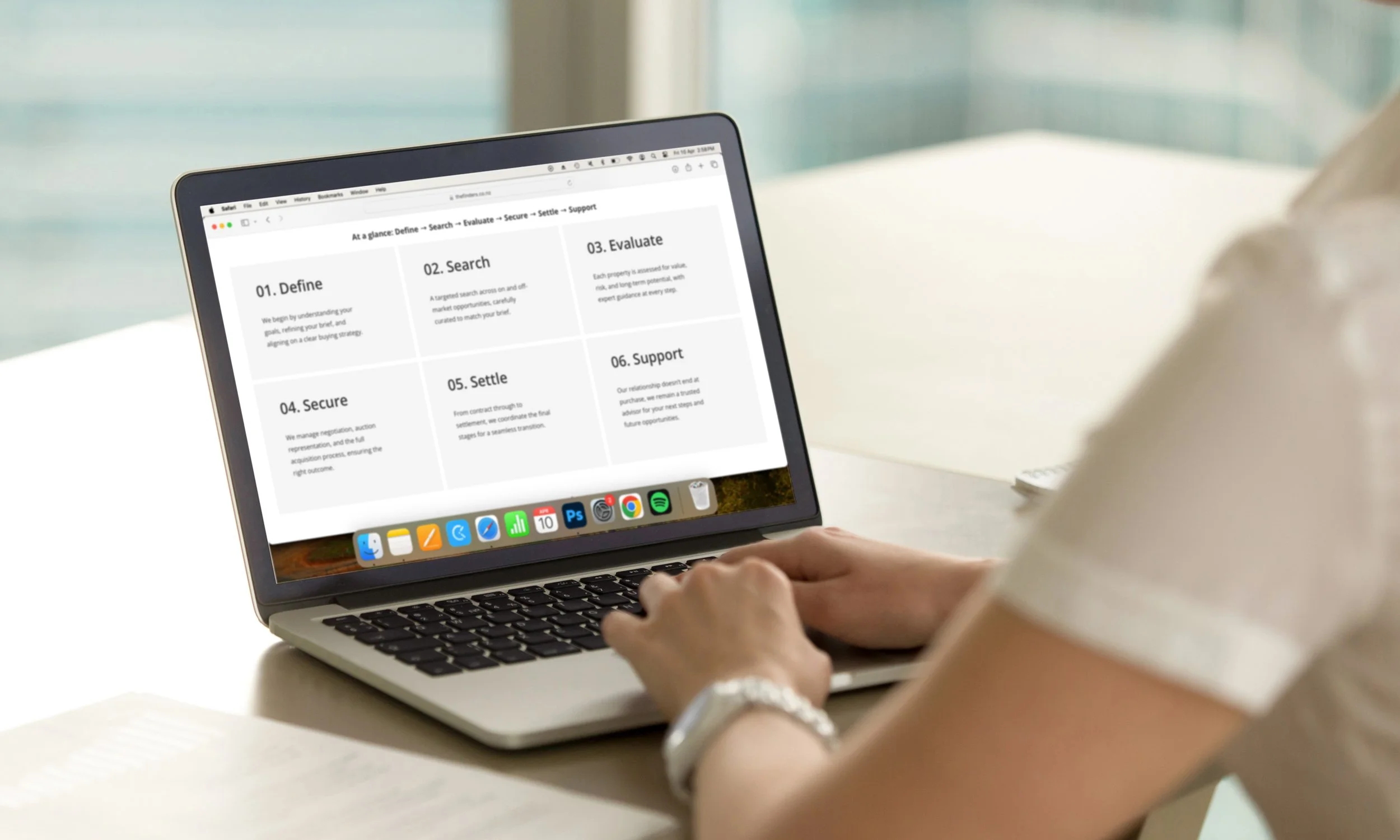
Six months into The Finders, we're reflecting on what we've learned about buying property in Taranaki. From securing off-market opportunities to the importance of due diligence, discover the results, lessons and insights shaping our approach to helping buyers make smarter property decisions.